What is it?
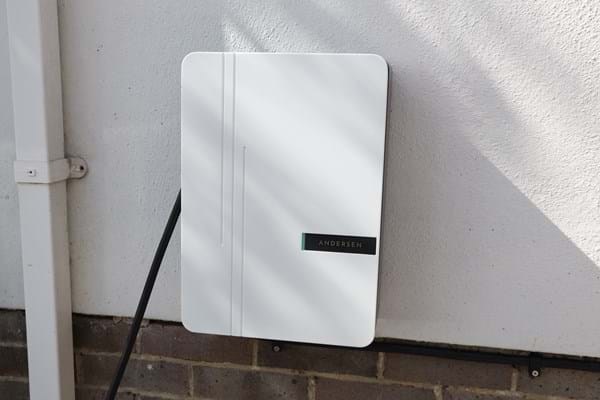
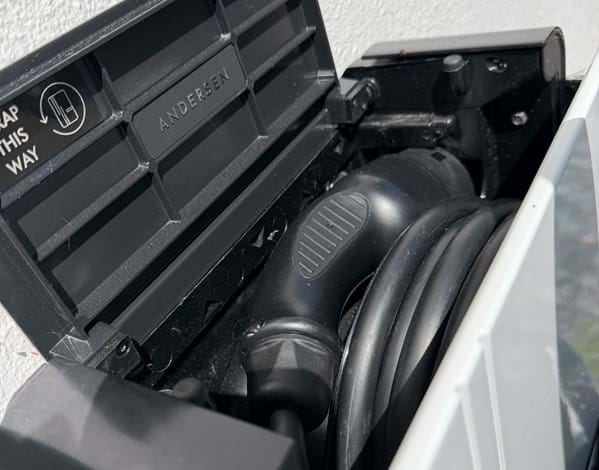
The Andersen A3 is the British wallbox manufacturer’s cheapest tethered home charge point. Unlike a lot of tethered wallboxes, which involve wrapping the cable externally around the unit itself, the A3 is a box that hides the cable away.
There's a dizzying array of colour and trim options available, which you can select through an online configurator. There are 13 body colours and 13 colours for the metal front panel, or for £200 you can swap to one of four wood panels, or carbon fibre for £320. The last one is a bit gaudy for our tastes.
I was initially worried the Andersen’s enclosed setup would then involve having a massive box attached to the side, but there's a (seemingly unintentional) clue in the name – at 430mm high and 310mm wide, the front roughly matches an A3 piece of paper. Meanwhile, the A3 has a depth of 148mm, so it doesn’t stick out from the side of the house too far.
What was installation like?
Before getting the unit installed, we were asked to record a video ‘survey’ on our phone to give the installer an idea of what they were working with. What we wanted wasn’t straightforward, with the wallbox to be installed near the corner of the house, a good distance from the electricity source in a garage. Our installer, Krzysztof (who turned up in an Andersen-branded VW ID.Buzz cargo, natch), was happy to oblige, though.
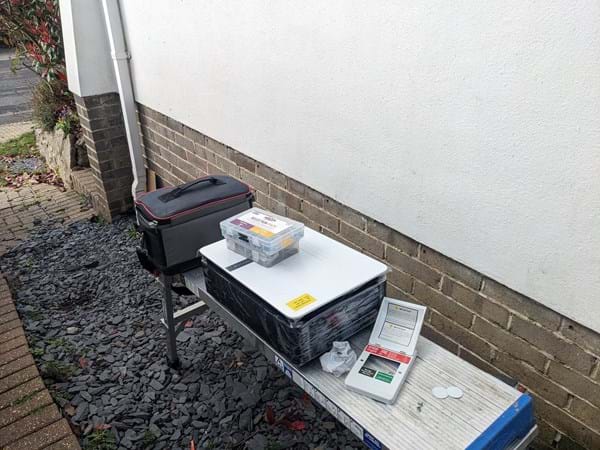
The solution was to drill through the garage wall and run the cable over the frame of the gate to our garden, run along the bottom of the house’s outer wall and to the charge point location. The chargepoint itself arrived at our house the day before via a courier.
The whole process took about four hours. I was expecting a long power outage, but in the end, the electricity was only off for about 15 minutes.
Is it any good?
The installation process was very smooth, and in the few months that have followed, we’ve used the charging unit on average a couple of times a week. It’s been plain sailing other than the breaker in the garage tripping once, which was easily reset, and it hasn’t happened again since.
The charger supplies exactly the energy it should to the car, and we’ve got on well with the app, which is a good way of keeping an eye on things without having to go out of the house and check on the car’s screen. It also shows the cost of each charge session, which is handy.
Although the front of the unit might look like a door which swings outward, it’s fixed. Instead, you open a flap at the top to access the connector and the cable, which unwinds via a gap between the front panel and the charger’s body. Winding it back up again takes some care – you need to make sure it sits correctly and is wrapped tightly, or the connector won’t sit properly in the recess at the top.
Should you buy it?
We’ve generally been very happy with our Andersen A3 wallbox. It might just be the most attractive charging unit on the market, but the aesthetics will need to be important to you, as the A3 is on the expensive side. At the time of the installation, these units cost £995, and that’s before you add any wood or carbon fibre finishes, which can bump up the price by up to £320.
If looks are high on the agenda, though, the Andersen A2 is highly recommended. The seven-year warranty is a big selling point too, when some rivals only offer three.